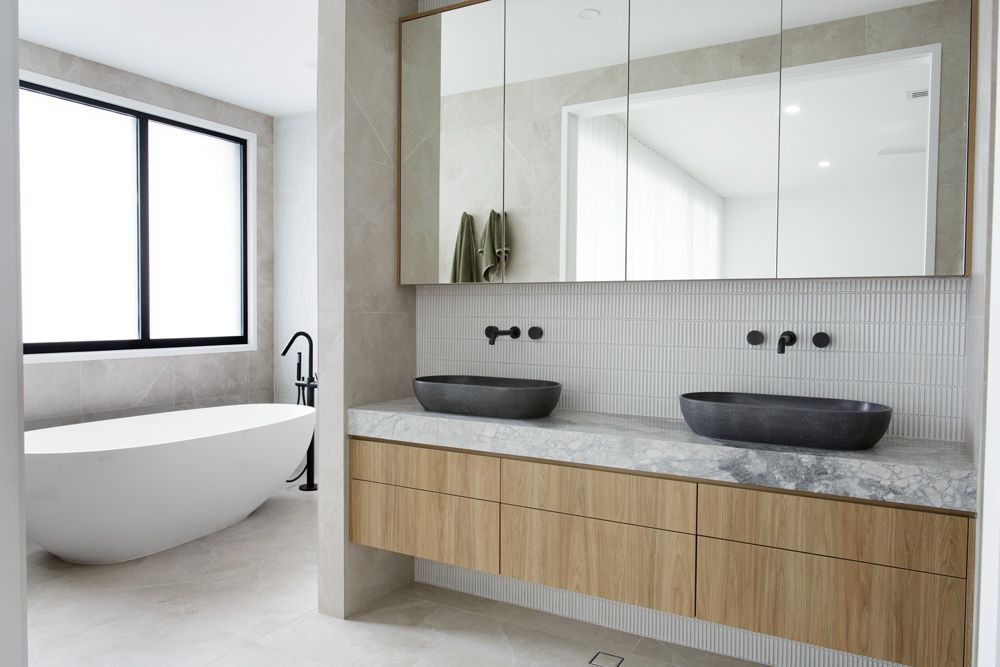
A bathroom vanity looks the same on the day it is installed regardless of whether the edge sealing was done properly or not. The difference becomes apparent over the following months and years, as the daily cycle of steam, splashing and humidity takes its toll on the substrate beneath the surface. Moisture ingress through poorly sealed edges is one of the most common causes of premature bathroom vanity failure, and it is almost entirely preventable. For anyone researching
bathroom vanities on the Sunshine Coast or planning a renovation, understanding how edge sealing works and why it matters is worth the time before a product decision is made.
Why Bathroom Vanities Are Particularly Vulnerable
Most bathroom vanity cabinets are built from particleboard or MDF substrates, materials that are strong, stable and cost-effective when sealed correctly but highly susceptible to moisture damage when they are not. These substrates absorb water readily when exposed at their edges, expanding as they do and losing structural integrity in the process.
The bathroom environment is relentless. Hot showers generate steam that settles on every surface. Water splashes near the sink and basin during daily use. Condensation cycles repeatedly across surfaces throughout the day. Even a well-maintained bathroom subjects its cabinetry to more sustained moisture exposure than almost any other room in the house.
The door and drawer faces of a vanity are typically covered by a laminate, veneer or polyurethane finish that protects the face of the substrate well. The edges are where the substrate is most exposed, and where moisture finds its way in if the sealing is inadequate.
What Happens When Edges Are Poorly Sealed
Moisture ingress at the edge of a cabinet panel does not announce itself immediately. The early stages of damage happen inside the substrate where it cannot be seen, but the visible signs follow predictably.
The typical progression of edge moisture damage looks like this:
- Water penetrates the unsealed or poorly sealed edge of the substrate at the bench surround, toe kick, side panel or door face
- The particleboard or MDF swells as it absorbs moisture, often unevenly, which causes the face material to begin lifting or bubbling at the edges
- The bond between the laminate or veneer and the substrate weakens as the substrate movement cycles repeatedly with changes in humidity
- Delamination becomes visible, with the face material separating from the substrate in sheets or at the edges of panels
- The structural integrity of the panel is compromised, leading to weakness in the cabinet carcass, door hinges pulling out and joints failing
By the time the damage is visually obvious, the substrate has typically been compromised beyond repair and the vanity is approaching replacement rather than repair.
How Quality Edge Sealing Works
Effective edge sealing addresses the substrate's exposure at every cut or formed edge. The two primary methods used in quality cabinet manufacture are edge banding and profiled edges with waterproof adhesive, and a thorough approach uses both.
Edge banding is a strip of material, typically ABS plastic, PVC or a laminate match material, applied to the exposed edge of a panel using a heat-activated adhesive. When applied correctly with proper bonding and flush-trimmed edges, edge banding creates a continuous, waterproof surface that prevents moisture reaching the substrate beneath.
The quality of edge banding is determined by several factors:
- The thickness and density of the banding material, with thicker banding offering more durable edge protection
- The adhesive system used, with hot-melt and EVA-based adhesives offering good initial bonds but polyurethane-based adhesives providing superior moisture resistance and long-term performance
- The precision of the application and trimming, as any gap or lifting at the banding edge creates a moisture entry point that negates the protection of the banding itself
Sealed exposed edges and joints within the cabinet, particularly around the sink cutout, the area behind the basin and any penetrations for plumbing, require additional sealant application using a waterproof silicone or equivalent product. These areas see the highest moisture exposure and are the most likely failure points if not specifically addressed.
The High-Risk Zones in a Bathroom Vanity
Not all edges and surfaces in a vanity cabinet are equally exposed. Understanding where moisture concentrates helps identify where edge sealing quality matters most.
The highest-risk areas in a typical bathroom vanity include:
- The bench surround and cutout edge immediately adjacent to the sink or basin, where water contacts the substrate directly during every use
- The area directly below the sink inside the cabinet, where plumbing connections can introduce moisture from condensation, minor drips or connection faults
- The toe kick at the base of the cabinet, which sits close to floor level where cleaning water, bath overflow and general splashing accumulate
- The side panels of freestanding or semi-recessed units that face the shower or bath zone in ensuites or combined bathroom layouts
- Any panel or component that runs against the wall, where residual moisture from the wall surface can wick into the substrate if the back edge is not sealed
Quality cabinet manufacture addresses each of these zones specifically rather than applying a standard edge treatment uniformly across all panels regardless of their exposure.
What to Look For in a Well-Made Bathroom Vanity
When assessing a bathroom vanity for purchase or specification, edge sealing quality is worth examining directly rather than assuming it is adequate.
Visible indicators of quality edge treatment include:
- Clean, flush edge banding with no gaps at the corners or joins, no lifting at the banding edge and a consistent appearance across all panels
- Sealed cutout edges around the sink aperture, visible as a silicone bead or sealed laminate edge rather than a raw substrate face
- A solid, well-adhered toe kick with banding that shows no signs of moisture damage even on display stock that has been in a showroom environment for some time
- Evidence of quality adhesive use, visible in the consistent and clean bond line at the banding edge
Custom-made cabinetry from an experienced manufacturer allows these details to be specified explicitly and verified before delivery and installation. Off-the-shelf flat-pack vanities vary considerably in edge treatment quality, and the specification is not always disclosed clearly in product descriptions.
Edge Sealing as Part of a Longer-Term Approach
Edge sealing is not a standalone solution. It works alongside material selection, finish quality, ventilation design and installation technique to determine how a bathroom vanity performs over its lifespan. A well-sealed cabinet installed in a poorly ventilated bathroom will still experience elevated humidity. A cabinet with an excellent finish but poor edge treatment will fail at the edges regardless of how good the door faces look.
The most durable bathroom vanities combine a moisture-resistant substrate such as moisture-grade MDF or moisture-resistant particleboard with quality edge banding, waterproof adhesives, sealed cutout and joint areas and a finish system appropriate to the bathroom environment. Each element supports the others, and the edge sealing is the part that holds the system together in the zones where moisture exposure is highest.
Talk to Foreshore Kitchens About Your Bathroom Vanity
We at
Foreshore Kitchens design and manufacture custom
bathroom vanities on the Sunshine Coast with the attention to detail that determines how long they last. Edge sealing, substrate selection, adhesive quality and finishing are not afterthoughts in our process. They are part of how we build cabinetry that holds up in the bathroom environment over many years. If you are planning a renovation or replacement and want a vanity built to a standard that accounts for everything the bathroom throws at it,
contact our team to discuss the options and arrange a consultation.